


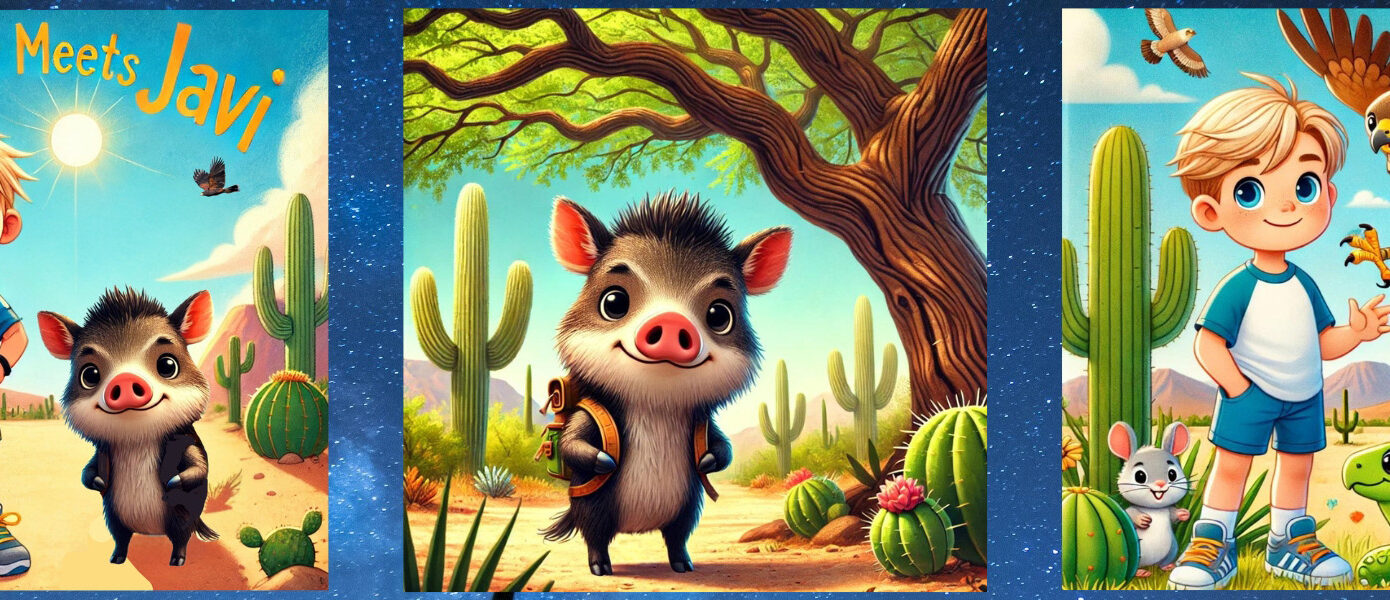
It was a perfect day for an adventure, and Javi the javelina, Timmy the tortoise, Jack the jackrabbit, and Xander were all excited. They had hopped aboard the Tucson Trolley Tours’ Hidden Gems Tour, ready to explore the city and learn something new. Their trolley made its first stop at the University of Arizona campus, where Tony Ray, their guide, had promised something special.
“Alright, gang, keep your eyes open. We’re about to see a true desert treasure!” Tony Ray said as they stepped off the trolley. He led them to a corner of the campus filled with desert plants, where a stunning purple prickly pear cactus stood proudly under the sunlight.
“Wow! Look at the color!” Jack exclaimed, his long ears twitching with excitement. “I didn’t know cacti came in purple!”
Tony Ray smiled. “That’s one of the cool things about prickly pear cacti. They come in different varieties, and their colors can range from green to purple. The green ones are more common, but purple prickly pear, like this one, thrives in areas with lots of sunlight and cooler temperatures.”
Timmy, always curious, pointed a stubby finger at some strange white, fuzzy spots on one of the pads. “What’s that white stuff? Is it part of the cactus?”
“Great observation, Timmy!” Tony Ray said. “That’s actually a waxy secretion made by tiny insects called cochineal bugs. They live under that white fluff and feed on the cactus. These bugs have been used for centuries to make a natural red dye.”
“Bugs… making dye?” Xander asked, wide-eyed.
“Yep! Ancient civilizations, like the Aztecs and Mayans, discovered that when you crush these bugs, they produce a bright red pigment called carmine. This dye became super valuable because it produced such a vibrant, lasting color. In fact, during the 16th century, cochineal dye was one of the most important exports from the Americas to Europe. It was used in royal clothing, art, and even flags.”
Jack’s eyes widened. “Wow! So people were using bug dye to color their clothes?”
“Exactly,” Tony Ray continued. “And it’s still used today. Cochineal dye is found in products like makeup, fabrics, and even food. Ever had red candy, pink yogurt, or a drink with a reddish hue? There’s a good chance it was colored with cochineal. It became especially popular after people realized it was a safer alternative to synthetic red dyes that were linked to cancer.”
“That’s incredible!” Javi said, admiring the cactus. “I didn’t know prickly pear cacti could host something so important.”
“And the cactus itself is pretty amazing too,” Tony Ray added. “The prickly pear cactus produces delicious fruit called tunas. Depending on the variety, the fruit can be red, yellow, or even orange. People make all sorts of tasty products from it—jelly, candy, syrups, and even prickly pear lemonade. The pads, or nopales, can be cooked and eaten too. They’re rich in vitamins and fiber!”
Timmy licked his lips. “I’ve had prickly pear jelly before—it’s delicious. And my garden could use a prickly pear plant.”
Tony Ray chuckled. “Just make sure you don’t get poked by the spines. Those tiny hair-like ones, called glochids, are the trickiest—they can stick to your skin and be hard to remove.”
Jack leaned in closer to inspect the cactus but quickly jumped back. “Good to know! I’ll admire from a distance.”
After everyone had their fill of cactus knowledge, Tony Ray led them back to the trolley. “Alright, gang, time to hop back on. There are more hidden gems to discover, and plenty more stories to hear.”
As they climbed aboard, Javi turned to his friends. “This was awesome! I learned so much about prickly pears and cochineal bugs.”
“Me too,” Xander said, holding a prickly pear sticker he’d picked up earlier. “And now I want to try prickly pear candy.”
“We’ll have to stop by The Tucson Gallery later,” Javi said. “They’ve got all kinds of cactus goodies there.”
The trolley rolled on, carrying the gang through more of Tucson’s unique sights, each one a new adventure waiting to unfold.
Want to discover Tucson’s hidden gems for yourself? Book a tour with Tucson Trolley Tours and experience the magic of the desert city—just like Javi, Timmy, Jack, and Xander did! And don’t forget to stop by The Tucson Gallery for prickly pear-inspired products, souvenirs, and local art. 🌵✨🚋
⚠️ Javi’s Important Warning for Kids: Be Careful Around Prickly Pear Cactus! 🌵🐞
Hey friends! You might be curious about those white, waxy spots on prickly pear cactus pads and want to peek underneath to find the cochineal bugs hiding there. But here’s something really important—don’t touch!
Here’s why:
- Prickly pear cactus has spines that can hurt you. Some of these spines are long and sharp, but the trickiest ones are tiny, hair-like stickers called glochids. They can stick to your skin, and they’re super hard to see and remove. They might cause itching, pain, and irritation if they get stuck in your fingers.
- Even if you’re careful, glochids can easily come off the cactus and stick to your skin when you try to touch or brush the waxy spots. Once they’re in your skin, they can be really annoying and even require help from an adult to get them out.
Instead of touching, why not admire the cactus from a safe distance? You can learn about cochineal bugs and their cool red dye online or at the library without getting poked!
Stay safe, and remember: Look, don’t touch, when it comes to prickly pear cacti. It’s better to keep your fingers happy and sticker-free! 🌵✨

Hours

Reviews

Fun Tucson AZ


