


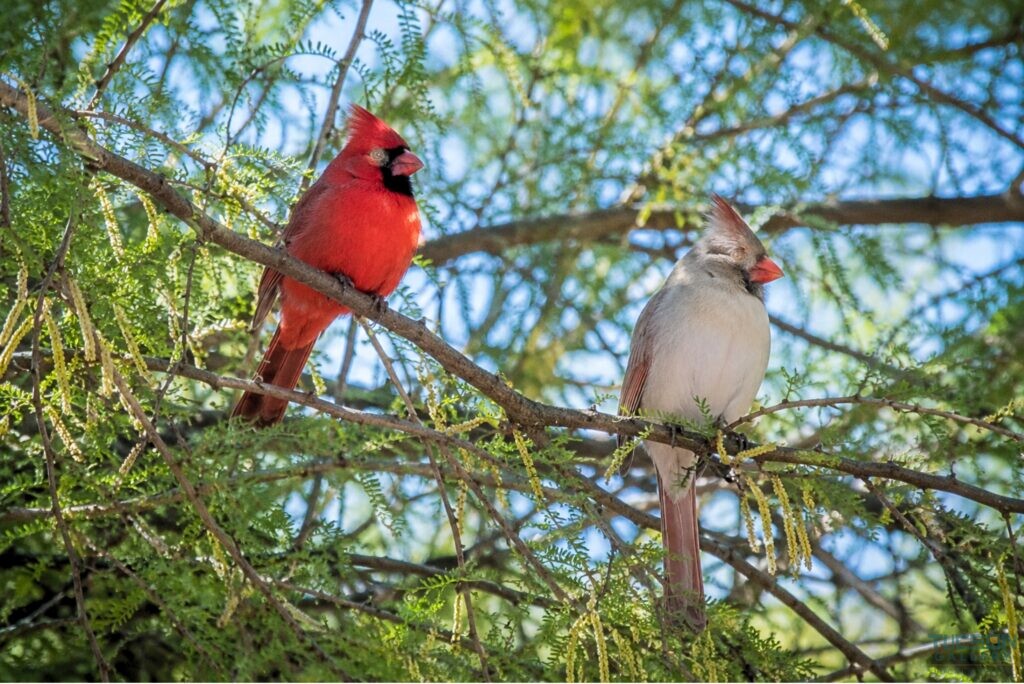
If you’ve ever visited the Phoenix area and caught a flash of brilliant green soaring overhead, you may have wondered if someone had lost a pet parrot. Surprisingly, those colorful birds probably weren’t escapees at all.
They were likely rosy-faced lovebirds, one of Arizona’s most unexpected wildlife success stories.
Most people are surprised to learn that these tiny parrots have become permanent residents of the Phoenix metropolitan area. Originally native to the arid deserts of Namibia, Angola, and South Africa, rosy-faced lovebirds found an environment in central Arizona that feels remarkably familiar. Today’s population is believed to have descended from pet birds that escaped or were released decades ago. Instead of disappearing, they adapted, began breeding, and established one of the only self-sustaining wild populations of lovebirds in North America.
Today, thousands of these vibrant birds call Phoenix home year-round.
Not Just Passing Through
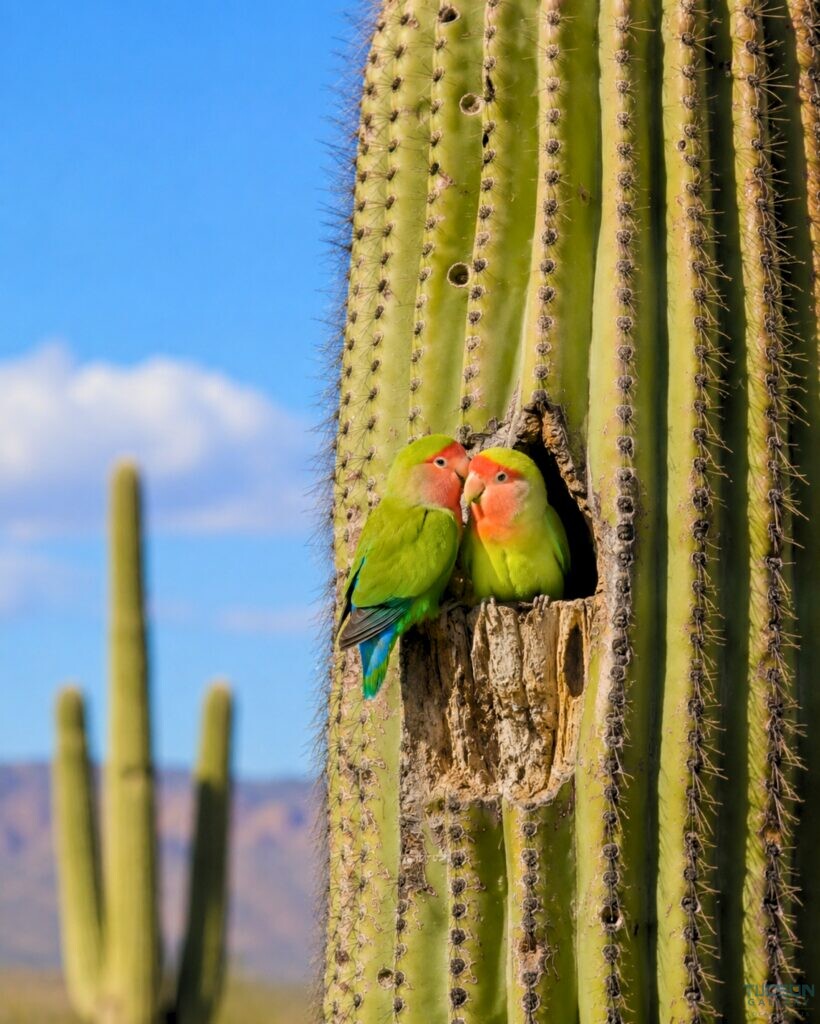
Unlike many birds that migrate with the seasons, Arizona’s lovebirds stay put.
They have become a familiar sight throughout neighborhoods in Phoenix, Mesa, Tempe, Scottsdale, and surrounding communities. Bird enthusiasts often hear their cheerful chatter long before spotting their bright green feathers darting between palm trees and saguaros. Their population has continued to grow steadily since they were first documented breeding in the 1980s.
One of the reasons they’ve flourished is because Phoenix’s climate closely resembles their native African desert habitat. Hot summers, mild winters, abundant desert vegetation, and neighborhood bird feeders have helped these adaptable little parrots thrive.
Desert Homes in Giant Saguaros
Perhaps the most fascinating part of their Arizona story is where they choose to live.
Rosy-faced lovebirds don’t carve out their own nests. Instead, they move into abandoned cavities originally created by woodpeckers inside giant saguaro cacti. These natural apartments provide insulation from Arizona’s intense summer heat while offering protection from predators.
Many also nest beneath old palm fronds in established neighborhoods, making city parks and residential areas some of the best places to observe them.
It’s a wonderful reminder that nature often finds creative ways to adapt.
Why Are They Called Lovebirds?
Their name isn’t simply because they’re colorful.
Lovebirds are famous for forming exceptionally strong pair bonds. They spend much of their lives together, often perched shoulder-to-shoulder while grooming one another, sharing food, or simply resting side by side.
Watching a bonded pair can look remarkably affectionate. They gently touch beaks, preen each other’s feathers, and stay close throughout the day. Their devotion has made them one of the world’s most recognizable symbols of companionship.
It’s easy to understand why photographers and artists are continually inspired by them.
From Nature to Art
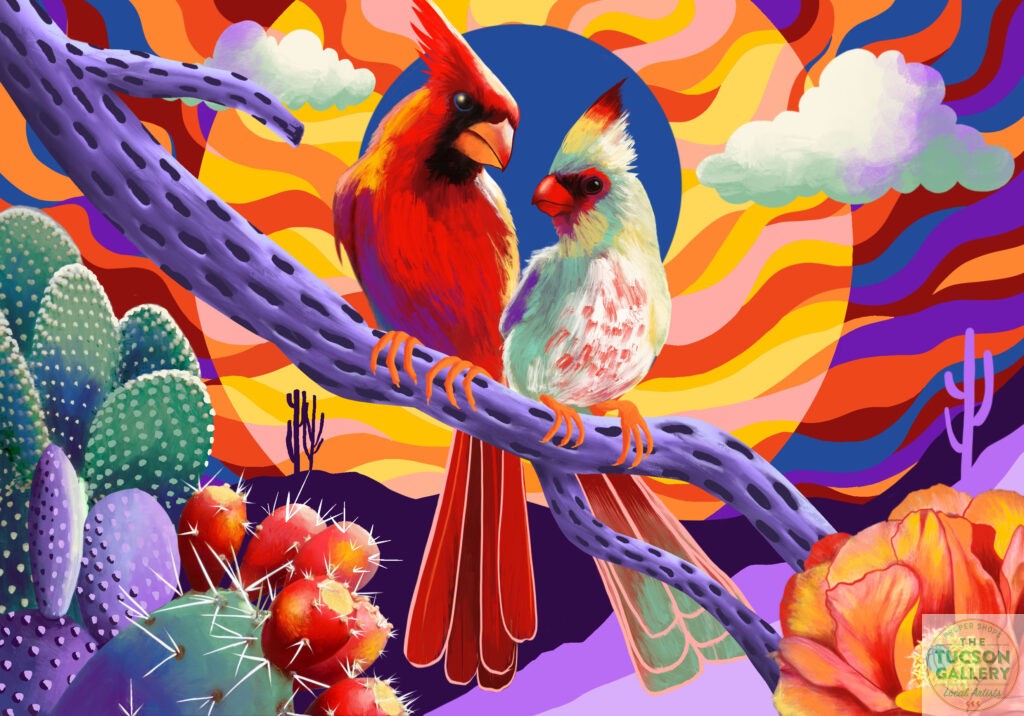
At first glance, Jessica Gonzales’ “Love Birds” might make you think of Arizona’s famous parrots.
Look a little closer, however, and you’ll discover something even more charming.
The painting actually features two beautiful cardinals, another species celebrated for their lifelong pair bonds and affectionate behavior. While the birds themselves are different, the message remains wonderfully familiar: companionship, loyalty, and the quiet beauty found in sharing life’s journey with someone special.
That playful connection makes the artwork especially enjoyable. Arizona may have its famous wild lovebirds living among the saguaros of Phoenix, but love stories can be found throughout nature, whether they’re told by colorful parrots, devoted cardinals, or through the imagination of a talented local artist.
Jessica’s painting captures that timeless feeling perfectly.
Discover “Love Birds” at The Tucson Gallery
Art has a wonderful way of helping us see familiar subjects with fresh eyes.
Whether you’re fascinated by Arizona’s remarkable wild lovebirds or simply appreciate artwork celebrating connection and companionship, Jessica Gonzales’ “Love Birds“ offers a delightful conversation piece that blends nature, symbolism, and beauty.
If this story made you smile, we invite you to explore Jessica’s artwork and discover the inspiration for yourself.
See Jessica Gonzales’ “Love Birds” here:
Who knows? The next time you hear a chorus of chirps while visiting Phoenix—or spot a pair of cardinals sharing a branch here in Southern Arizona—you might just think of the many ways nature reminds us that some partnerships are meant to last a lifetime.
Frequently Asked Questions About Arizona’s Lovebirds
Are there really wild lovebirds in Arizona?
Yes. Greater Phoenix is home to an established wild-living population of rosy-faced lovebirds. The population is believed to have descended from pet birds that escaped or were released decades ago.
Are rosy-faced lovebirds native to Arizona?
No. Rosy-faced lovebirds are native to the dry regions of southwestern Africa. They have adapted to the urban and desert environments found throughout the Phoenix metropolitan area.
Where can you see wild lovebirds in Arizona?
Rosy-faced lovebirds are most commonly observed around Phoenix, Mesa, Tempe, Scottsdale, and neighboring communities. Look for them in older neighborhoods, city parks, mature palm trees, saguaros, and areas with reliable bird feeders or water.
Do rosy-faced lovebirds live in Tucson?
Individual lovebirds and small groups have occasionally been reported outside the Phoenix area, including in Tucson. However, Arizona’s well-established wild population remains centered in greater Phoenix, and a Tucson sighting does not necessarily indicate a permanent local colony.
Why do Arizona lovebirds nest in saguaro cacti?
Rosy-faced lovebirds do not excavate their own cactus cavities. Instead, they occupy existing holes, including cavities originally created by Gila woodpeckers. They may also nest beneath dead palm fronds and in other sheltered urban spaces.
Do Arizona’s lovebirds migrate?
No. The established Phoenix population can be seen throughout the year. The birds may move locally in search of food, water, shade, and nesting sites, but they do not undertake a regular seasonal migration.
Why are they called lovebirds?
Lovebirds form strong, long-lasting pair bonds. Bonded birds frequently sit close together, groom one another, share food, and maintain close contact, giving them their affectionate name.
Does Jessica Gonzales’ “Love Birds” depict rosy-faced lovebirds?
No. Jessica Gonzales’ artwork depicts two colorful cardinals rather than Arizona’s rosy-faced parrots. The birds are different species, but they share the artwork’s broader themes of companionship, devotion, and connection.